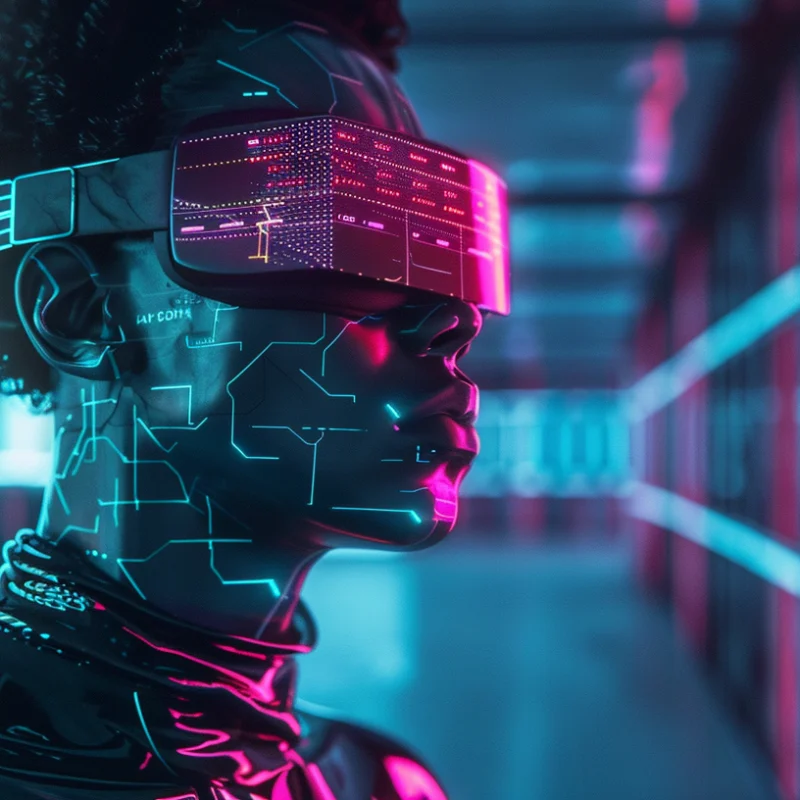
The era of spatial computing
Digitalization & Future Tech 2. April 2026 4 Min. Lesezeit

The era of spatial computing

The future of human-computer interaction

Oliver Breucker

Oliver Breucker

Managing Director ROOVER

The short answer

In a world where technology and digital innovation are constantly advancing, new terms keep popping up to grab our attention. One of these terms is“spatial computing”.

But what exactly is behind this concept?

In this article, we will take an in-depth look at how it works, what makes it special, how to integrate it into the work environment, and what the first tools are.

What is Spatial Computing?

Spatial computing refers to the linking of digital data and information with the physical world, creating a new form of human-computer interaction. 

It extends the conventional boundaries of computers and enables us not only to present information on screens, but to integrate it into the real world. Spatial computing creates immersive experiences by integrating virtual elements into our physical environment. 

How does Spatial Computing work?

Spatial computing is enabled by a number of technologies, including:

  • Augmented Reality (AR): AR is a technology that overlays the real world with virtual elements. AR systems can run on smartphones, tablets, head-mounted displays (HMDs), or other devices.
  • Virtual Reality (VR): VR is a technology that immerses users in a completely artificial world. VR systems are typically used with HMDs that obscure the user’s vision and project a virtual image onto the eyes.
  • Mixed Reality (MR): MR is a technology that combines elements of AR and VR. MR systems allow users to interact with virtual objects in the real world.

The basis of spatial computing is the collection and processing of data about the physical environment. Various technologies such as sensors, cameras and 3D scans are used for this purpose. These capture information about the user’s position, movement and environment.

Subsequently, this data is analyzed in real time and combined with virtual elements. Output is usually via augmented reality (AR) glasses, headsets, or other display devices .

What is special about spatial computing?

Spatial computing enables a whole new way of interaction between people and computers. It offers more natural and easier control, rather than being limited to traditional input devices like a keyboard and mouse.

This allows users with Spatial Computing:

  • See and touch virtual objects in the real world
  • Interact with virtual objects as if they were real
  • Use your hands, arms, and whole body to interact with computers,

and thus have more fun and a more immersive experience.

In addition, they can easily use gestures or voice commands to manipulate virtual objects directly in their environment, display information or perform complex tasks.

This makes the user experience more effective and immersive.

What Spatial Computers already exist?

Currently, there are several platforms and devices on the market. Among the best known are the Apple Vision Pro, Microsoft HoloLens and Oculus Quest.

These devices offer different functions with the aim of connecting the physical and digital worlds. As technology continues to develop, it is expected that more innovations in the field of spatial computing will come to market in the future

How can we support you?

To what extent will spatial computing change the way we work?

Spatial computing has the potential to fundamentally change the way we work. One of the biggest impacts will be the way we present and access information.

Having data displayed in the field of view instead of looking at a screen is made possible by seamlessly integrating digital information into the work process. This promotes efficiency and productivity.

In addition, it will also Improve collaboration and communication . By using AR glasses, teams in different locations can collaborate virtually and visualize their ideas in a shared virtual environment.

This reduces the the need for travel and enables more effective collaboration across geographic boundaries. across borders.

Another area is training and continuing education. Through the integration of virtual training environments, employees can learn complex tasks and procedures in a safe and realistic environment.

This can lead to improved effectiveness and efficiency in training and shorten the learning curve. Furthermore, customers can be given better insight into products and services.

The era of spatial computing has begun.

Spatial computing opens a new era of human-computer interaction by seamlessly integrating digital information with the physical world.

With the help of technologies such as AR, VR and MR, interaction with computers is becoming more natural, intuitive and immersive.

Immersive technology is expected to fundamentally change the way we work by revolutionizing the way we present information, collaborate and learn.

Companies and professionals should familiarize themselves with the possibilities in order to take advantage of the opportunities offered by this innovative technology.

Your expert for Spatial Computing

Roover-Oliver-Breucker-Metaverse-Expert-SW
Oliver Breucker
Spatial Computing

You might also be interested in

Managers and engineers in a meeting room of a medium-sized industrial company, planning AI-first processes and operating models together.
AI strategy for SMEs 2026

AI Strategy & Management 1. Mai 2026 17 Min. Lesezeit KI-Strategie Mittelstand 2026 What skills employees need when dealing with AI and why targeted training is becoming strategically relevant. Oliver Breucker Experte für KI-Transformation & Digitale Zukunftstechnologien The short answer The short answer An AI strategy for SMEs 2026 is

Futuristic office at night with a team of executives standing in front of a holographic interface with structured AI prompts, in neon pink and night-blue in Roover style.
Prompting Guide for companies

AI Tools & Tutorials 18. November 2025 18 Min. Lesezeit Prompting Guide für Unternehmen How to get better AI results with clear prompts Robin Reuschel Experte für KI-Strategie & Organisation The short answer The short answer Prompting is not a “nice-to-have” in the company, but a core competence: those who

Spatial-computing-new-era-apple-vision-pro
The era of spatial computing
What is Spatial Computing? Spatial computing refers to the linking of digital data and information with the physical world, creating a new form of human-computer interaction. It extends the traditional boundaries of computers and allows us not only to present information on screens, but to integrate it into the real